

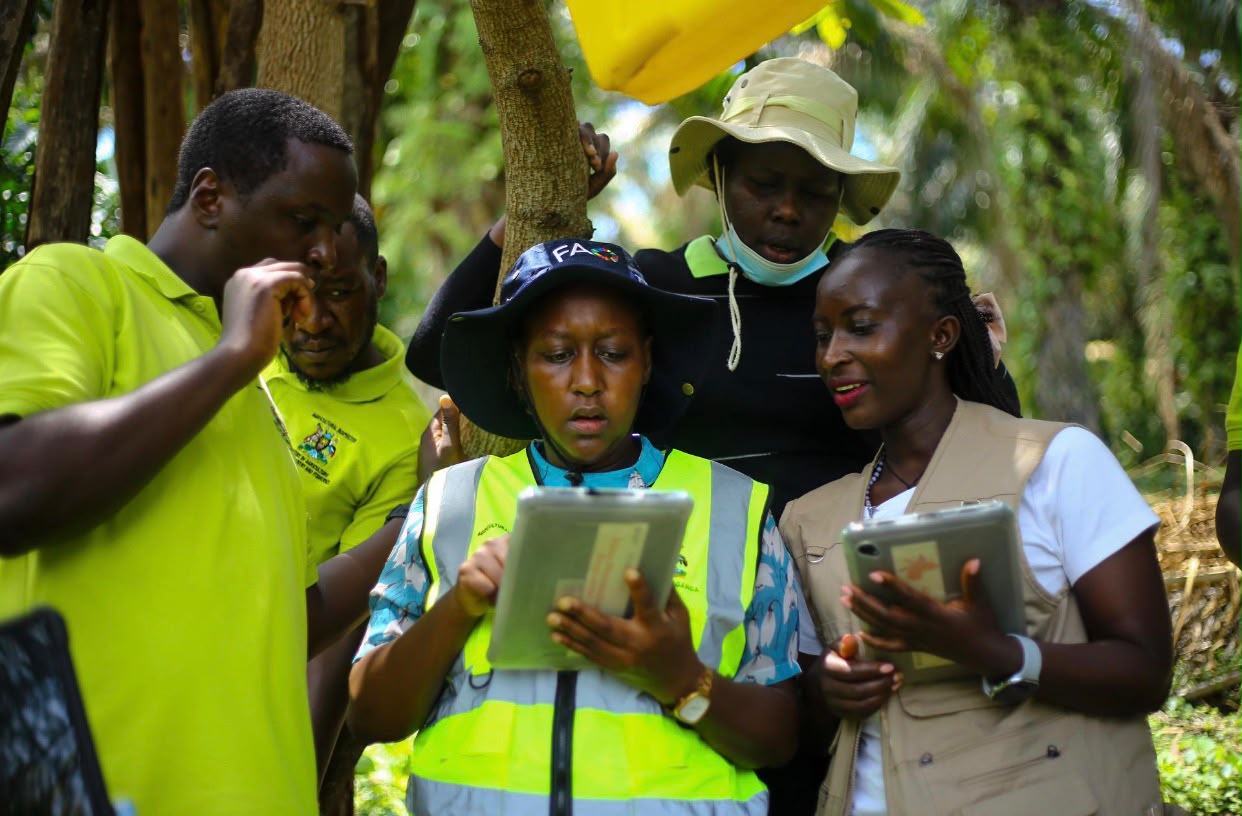
Data collection in Uganda involves more than asking questions and recording answers. It requires proper planning, stakeholder engagement, trained field teams, suitable data collection tools and careful quality checks.
Researchers, organisations, development partners and businesses often collect information to understand communities, assess projects, study markets or make informed decisions. However, the quality of that information depends on how the team plans and conducts the fieldwork.
In Uganda, field teams may work in urban centres, rural communities, trading centres, health facilities, farms and other locations. Each setting presents different practical considerations, from reaching respondents to obtaining permission to enter a community.
This guide explains how data collection in Uganda works, what field teams should prepare for, how they can protect data quality and when local field support can help.
What Is Data Collection in Uganda?
Data collection in Uganda refers to the process of gathering information from people, institutions, records, communities or physical locations for research, monitoring and evaluation, business analysis or other defined purposes.
For example, a development organisation may collect household information to assess a livelihood programme. Similarly, a researcher may interview community members to understand access to health services, while a business may gather information about customers, suppliers or market conditions.
The methods depend on the purpose of the assignment, the people involved and the type of information required.
Common methods of data collection
1. Household surveys
Household surveys help teams collect structured information from selected households. Questions may cover livelihoods, education, health, agriculture, access to services or other study topics.
Fieldworkers usually follow a questionnaire and record each respondent’s answers using paper forms, tablets or mobile phones.
2. Key informant interviews
Key informant interviews gather detailed information from people with relevant knowledge or experience. These may include local leaders, service providers, government officials, project staff or community representatives.
3. Focus group discussions
Focus group discussions bring a small group of participants together to discuss a particular topic. A trained facilitator guides the discussion, while a note-taker or recording system captures the information according to the study protocol and participants’ consent.
4. Direct observation and site visits
Researchers may visit project sites, farms, health facilities, businesses or community locations to observe conditions and verify information. They should use clear observation criteria and respect any applicable access and privacy requirements.
5. Digital data collection
Many field teams use digital platforms such as KoboToolbox and ODK to administer questionnaires and record responses. These tools can support skip logic, required fields, validation rules and faster data transfer.
However, digital tools do not automatically guarantee accurate information. Teams still need clear questions, proper training, supervision and regular data quality checks.
What Does Fieldwork Really Involve?
A successful field assignment follows a process. Although the exact steps vary, most projects benefit from the following activities.
1. Planning the data collection exercise
Before sending fieldworkers into the field, the team should understand the study objectives and agree on the information it needs.
This stage involves defining the target population, selecting study locations, estimating the required sample, preparing the questionnaire and developing a fieldwork schedule.
The team should also consider transport, accommodation where necessary, communication, equipment, staff responsibilities and the available budget.
Good planning reduces confusion during implementation. It also helps the team identify possible delays before they affect the schedule.
2. Stakeholder engagement and introductory meetings
In Uganda, some field assignments require engagement with relevant authorities and community stakeholders before data collection begins.
Depending on the assignment and local requirements, the team may introduce the activity to relevant ministries, district officials, sub-county leaders, parish representatives, local council leaders and community representatives.
These meetings help stakeholders understand the purpose of the activity, the locations involved, the expected timeline and the responsibilities of the different parties. They can also help the field team understand local arrangements and coordinate access to the intended study areas.
For example, a team conducting a household survey across several sub-counties may need to coordinate with district and lower-level leaders before visiting selected villages.
However, stakeholder engagement does not replace individual informed consent. Nor does an introductory meeting replace any research ethics approval, formal authorisation or permit that the assignment requires.
The team should confirm the applicable requirements before fieldwork begins.
3. Preparing and testing data collection tools
Once the team understands the assignment, it can prepare the questionnaire and other data collection tools.
For digital surveys, this may involve programming the form in KoboToolbox, ODK or another suitable platform. The team should check question wording, response options, skip patterns, validation rules and the flow of the questionnaire.
Next, the team should test the tool before full deployment. A pretest can reveal unclear questions, technical problems, missing response options and practical challenges that the designers did not anticipate.
The team can then correct these issues before collecting the main dataset.
4. Training fieldworkers and supervisors
Fieldworkers need more than a questionnaire. They must understand the study objectives, sampling procedures, interview techniques, consent process, confidentiality requirements and escalation procedures.
Training should also cover the use of digital devices, communication with respondents and the handling of unexpected situations.
Where possible, practical exercises and a pretest help staff apply what they have learned. Supervisors should also explain how they will review submissions, provide feedback and address errors during data collection.
As a result, the team starts fieldwork with a clearer understanding of the expected standards.
5. Conducting field interviews and collecting information
During data collection, fieldworkers visit the selected locations and follow the approved study procedures.
Depending on the assignment, they may conduct household interviews, speak with key informants, facilitate group discussions, review records or observe conditions at project sites.
Fieldworkers should explain the purpose of the activity, obtain informed consent where required and allow participants to decide whether they wish to take part. They should also record responses accurately instead of guessing, changing answers or completing interviews without the required participation.
In addition, the team should follow the agreed sampling procedure. Replacing a selected respondent simply because another person is easier to reach can introduce bias into the results.
Fieldwork also requires flexibility. Rain, transport difficulties, respondent availability, network problems and local events may affect the daily schedule. Therefore, supervisors should monitor progress and adjust field arrangements without compromising the study design.
6. Supervising field teams and checking data quality
Data collection does not end when a fieldworker submits a questionnaire. The team must review the information throughout the exercise.
Supervisors can check submitted records for missing answers, inconsistent responses, unusual values, duplicate entries and other problems. They can also compare progress against the sample plan and identify locations or groups that require attention.
For digital surveys, the team may use dashboards, submission reports and validation checks to monitor data as it arrives.
When a problem appears, supervisors should investigate it promptly. For example, they may contact the fieldworker to clarify an entry, review the original record or arrange a follow-up according to the study protocol.
These checks help the team correct avoidable errors while fieldworkers can still clarify the information.
7. Closing fieldwork and preparing the dataset
After the team completes the required interviews or observations, it should review the final dataset and document any outstanding issues.
The team may check sample completion, remove confirmed duplicate records, resolve inconsistencies and organise the data for analysis. Any cleaning or correction should follow documented rules that preserve the integrity of the original information.
The team should also protect confidential records and share data only with authorised people, in line with the study’s consent arrangements and applicable requirements.
Finally, the field team should document the work completed, explain any limitations and hand over the dataset and relevant fieldwork records to the responsible project team.
Common Challenges During Data Collection in Uganda
Field conditions can change quickly. Even a well-planned assignment may encounter practical challenges once the team reaches the study area.
Transport and access to study locations
Some locations require long journeys, difficult road access or additional travel between villages. During rainy periods, certain routes may become difficult to use.
Teams can reduce delays by planning realistic travel schedules, confirming local access arrangements and allowing time for movement between interview locations.
Respondent availability
People may be away from home, working in gardens, attending community activities or occupied with other responsibilities when the team arrives.
Rather than rushing an interview or recording information from an unauthorised substitute, fieldworkers should follow the approved call-back and respondent-selection procedures.
Language and communication
Respondents may prefer a local language rather than English. If a study operates in several language groups, the team should prepare suitable translations and ensure that fieldworkers understand the questions consistently.
For sensitive or technical topics, the team should avoid translations that change the meaning of the original question.
Network and device problems
Some areas have unreliable internet access. Digital forms may also encounter problems because of device settings, low battery levels or incorrect form configuration.
Teams should test devices in advance, carry appropriate charging equipment and confirm that the platform supports offline work when necessary. They should also establish a clear procedure for safely synchronising and backing up records.
Incomplete or inconsistent responses
Fieldworkers may misunderstand questions, skip required sections or enter values incorrectly. Without regular supervision, these problems can remain undetected until the team finishes fieldwork.
Daily reviews, clear feedback and refresher guidance help address such issues early.
Changes in the field schedule
Stakeholder availability, weather, transport and unexpected local activities can affect the planned schedule.
For this reason, supervisors should communicate changes promptly, document delays and protect the quality of the study rather than focusing only on the number of interviews completed.
How Field Teams Protect Data Quality
Reliable data requires consistent procedures throughout the assignment. Teams should build quality checks into the planning, collection and review stages.
The following practices can help:
- Use a clear study protocol. Give fieldworkers consistent instructions on sampling, consent, interviewing and recording information.
- Test questionnaires before deployment. Correct unclear questions and technical errors before the main exercise.
- Train and supervise fieldworkers. Make sure staff understand both the subject matter and the data collection procedures.
- Monitor submissions regularly. Review records for missing values, duplicates, unusual patterns and inconsistent answers.
- Verify information appropriately. Use approved follow-up procedures when a response requires clarification.
- Document changes. Record corrections, deviations from the plan and reasons for any approved adjustments.
- Protect respondent information. Limit access to personal data and follow the study’s confidentiality and data protection requirements.
- Review the final dataset. Confirm completion, consistency and readiness for analysis before handing over the data.
Importantly, the number of completed interviews does not by itself establish data quality. A team may reach its target while still recording inaccurate or incomplete information. Therefore, supervisors must consider both progress and the reliability of the data.
Research Approval, Ethics and Permissions in Uganda
Before collecting information, researchers and organisations should determine which approvals, permissions and ethical safeguards apply to their specific activity.
Requirements can vary according to the research design, subject matter, study population, institution and locations involved. Research involving human participants may require review by an appropriate research ethics committee and relevant authorisation or registration through the applicable Ugandan processes.
Researchers should consult the Uganda National Council for Science and Technology (UNCST) and other relevant authorities to confirm current requirements before beginning an activity.
Official website: Uganda National Council for Science and Technology.
In addition, field teams should explain the purpose of the study to participants, obtain informed consent where required and handle personal information responsibly.
Teams should not assume that permission from a local leader alone satisfies every research approval requirement. Similarly, formal research approval does not remove the need to respect local coordination arrangements and individual participants.
When a project involves sensitive information or vulnerable populations, the team should pay particular attention to the approved protocol, confidentiality safeguards and procedures for responding to concerns.
Checklist Before Starting Data Collection in Uganda
Before deploying a field team, confirm the following:
- The study objectives and required information are clear.
- The target population, sample and study locations are defined.
- Relevant authorities and community stakeholders have received the necessary introductions.
- Applicable research approvals, permits and permissions are confirmed.
- The questionnaire and digital tools have been tested.
- Fieldworkers and supervisors have completed the required training.
- Consent and confidentiality procedures are clear.
- Transport, communication, accommodation and equipment are organised where needed.
- Supervisors have a plan for daily progress and data quality checks.
- The team has procedures for handling delays, incomplete interviews and technical problems.
- Data storage, access, transfer and final handover arrangements are agreed upon.
This preparation helps teams avoid preventable problems and gives fieldworkers a clearer plan for carrying out their responsibilities.
When Should You Work With a Local Field Partner?
Organisations conducting research or other field activities in Uganda may benefit from working with someone who understands the local operating environment.
A local field partner can help coordinate introductions, identify relevant contacts, arrange field visits, support communication and help organise activities across different locations.
For example, a research team arriving from outside Uganda may already have a strong questionnaire and research design. However, it may still need practical support to coordinate meetings, organise visits and understand how to approach the intended locations.
Likewise, a business investigating a market may need help gathering local information, identifying potential contacts or arranging visits to relevant businesses and communities.
Local support does not replace the organisation’s responsibility for research design, ethics, data protection or technical oversight. Instead, it can complement those responsibilities by helping the team coordinate its work on the ground.
The appropriate level of support depends on the assignment, the locations involved and the skills available within the project team.
Frequently Asked Questions About Data Collection in Uganda
What is data collection in Uganda?
Data collection in Uganda involves gathering information from people, households, institutions, records or locations for research, monitoring and evaluation, business analysis and other defined purposes.
Which methods do researchers use to collect data in Uganda?
Common methods include household surveys, key informant interviews, focus group discussions, direct observation, document reviews and digital questionnaires. Researchers select methods according to their objectives, target population and study design.
Which digital tools can field teams use in Uganda?
Field teams may use KoboToolbox, ODK and other digital survey platforms to record information, apply validation rules and manage submissions. The best tool depends on the questionnaire, connectivity, project requirements and the team’s technical capacity.
Do researchers need permission to collect data in Uganda?
The requirements depend on the activity. Formal research involving human participants may require ethics review and relevant authorisation or registration. Researchers should check current requirements with UNCST and any other applicable authorities. They should also follow relevant local coordination arrangements and obtain informed consent where required.
Why is stakeholder engagement important before fieldwork?
Stakeholder engagement helps relevant authorities and community representatives understand the purpose, locations, timing and coordination arrangements for an activity. It can also help field teams plan access and communicate more effectively. However, stakeholder engagement does not replace individual consent or formal research approvals.
What are the main challenges of fieldwork in Uganda?
Common challenges include transport and access, respondent availability, language differences, network problems, incomplete responses and changes in the field schedule. Proper planning, trained staff and regular supervision can help teams manage these challenges.
How can an organisation improve data quality during fieldwork?
An organisation can improve data quality by testing its tools, training fieldworkers, following a clear sampling plan, monitoring submissions, checking inconsistencies and documenting corrections. Regular supervision helps the team identify problems before they affect the final dataset.
Can a local field partner support research conducted by an international organisation?
Yes. Depending on the assignment, a local partner can help coordinate stakeholder introductions, arrange field visits, identify relevant contacts and support field operations. The international organisation remains responsible for its research design, approvals, ethical standards and overall data management.
Conclusion
Successful data collection in Uganda depends on more than reaching respondents and completing questionnaires. Teams need a clear plan, appropriate stakeholder engagement, suitable tools, trained fieldworkers and consistent data quality checks.
They must also understand the local context, follow applicable approval and consent procedures, and respond to practical challenges without compromising the integrity of the study.
Whether an organisation is conducting a household survey, evaluating a development programme, studying a market or gathering information for a research project, careful preparation can make fieldwork more organised and the resulting information more useful.
Need Support With Research or Field Operations in Uganda?
Africa Insider helps businesses, researchers, organisations and individuals coordinate activities on the ground in Uganda and East Africa.
Depending on your requirements, support may include local introductions, field coordination, information gathering, site visits, sourcing and local representation.
If you are planning a research assignment, market study or field activity in Uganda, visit benjaminokech.africa to learn more about the services.
Benjamin Okech
Africa Insider | Your trusted person on the ground in Uganda and East Africa.
